Custom stacker trailers
Increase transport capacity while keeping weight, balance, access and tow-vehicle limits at the center of the design.
Capacity only matters if the complete setup can tow safely.
Stacker trailers make use of vertical space, often to transport multiple vehicles or a vehicle with support equipment. Universal reviews the tow vehicle's ratings, planned payload and equipment list, then positions the running gear and selects components around the target gross vehicle weight.
Weight, balance and access come first.
A tall shell is not enough. The useful design accounts for the heaviest loaded condition, where that weight sits, how the upper level operates and how people move around the vehicles and gear.
- Vehicle and equipment weights
- Tow-vehicle limits
- Axle position and stability
- Rear opening and loading path
- Lift and support equipment
Built for the combination you actually carry.
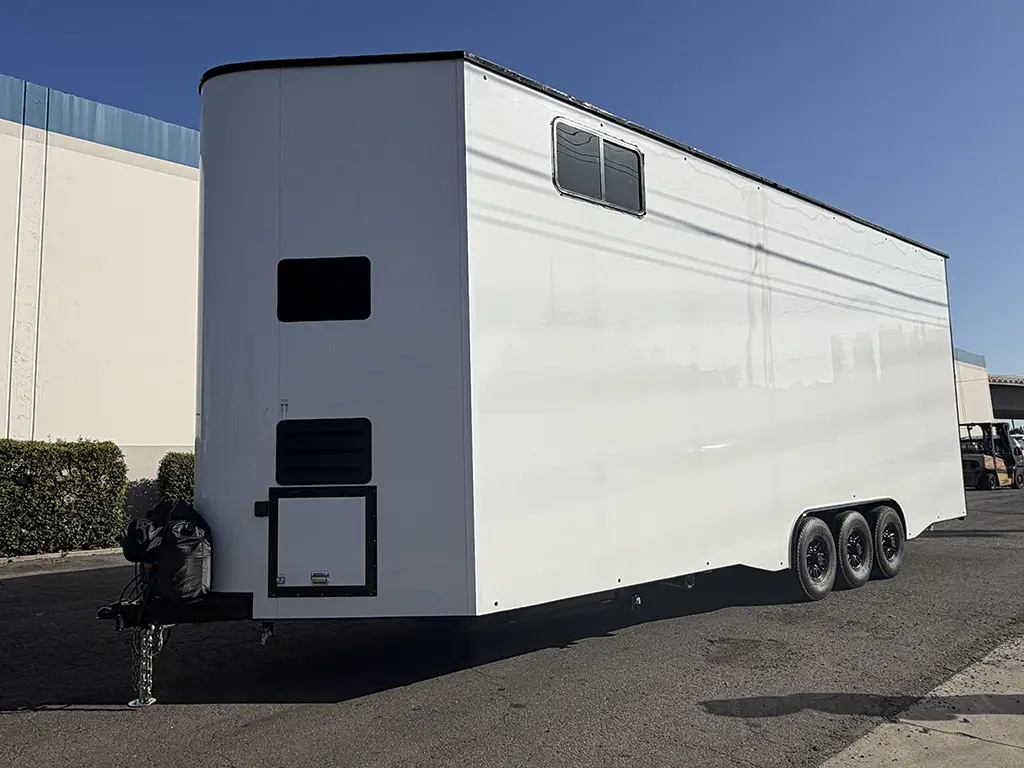
Universal's current stacker information notes that many builds use triple axles and a 102-inch overall width with a 96-inch rear opening. Final dimensions and equipment should be selected for the specific payload and tow setup.
Stacker trailer walk-around.
Get a closer look at the trailer, its exterior details and everyday access.
Explore the stacker.
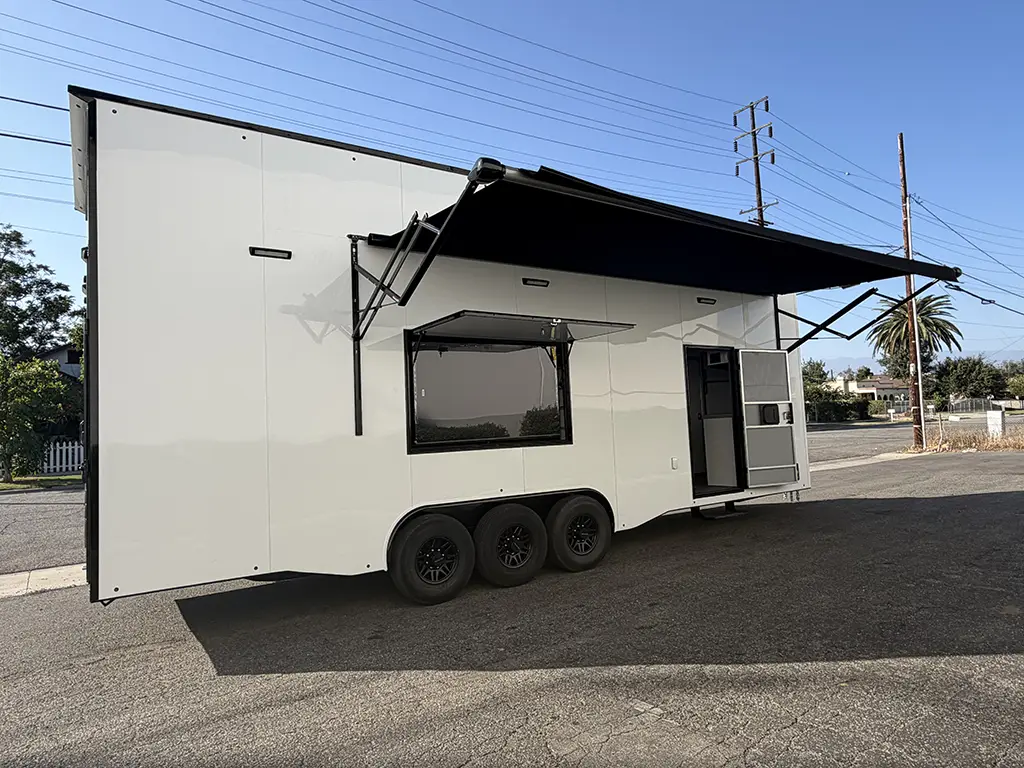
See the exterior, access points and awning from every angle. Select a photo for a closer look.
What buyers ask before the build.
Why is tow-vehicle information needed?
The loaded trailer must remain within the tow vehicle's ratings. Universal uses the planned equipment and towing setup to avoid adding more trailer than the vehicle can safely and legally handle.
Are all stacker trailers the same size?
No. Existing Universal materials describe common configurations, but the final dimensions, axles, lift and interior equipment depend on the target payload.